

Collaborative care in addiction treatment can make a meaningful difference in how connected, consistent and personal a client’s experience feels.
If you’ve spent time comparing addiction treatment centers in Orange County, you’ve probably noticed how quickly the websites start to sound the same. Most talk about individualized care, evidence-based therapy, comfortable accommodations and a fresh start.
What’s harder to see online is what happens behind the scenes.
Who notices when someone hasn’t slept well for two nights? Does the therapist know what nursing observed that morning? Does the medical team know about the anxiety that keeps showing up in group? Is the person planning for discharge hearing what the rest of the clinical team is seeing?
At The Retreat at Orange County, a detox and residential addiction treatment center in Santa Ana, California, those conversations are an important part of care.
Program Director Tami Distefano, CADC II, ICADC, describes it simply:
“We don’t operate in silos.”
That philosophy shapes how the team approaches addiction treatment. Medical care, nursing, therapy and case management are not treated as separate pieces of a person’s recovery. The goal is for the people supporting a client to understand the same bigger picture.
What Is Collaborative Care in Addiction Treatment?
Collaborative care in addiction treatment is a team-based approach in which medical, nursing, therapeutic and case management professionals communicate throughout treatment and coordinate care around the individual’s changing needs.
That sounds straightforward. In practice, it can make a meaningful difference.
Recovery rarely fits neatly into one category. Someone may be managing withdrawal symptoms while also experiencing anxiety, poor sleep, trauma responses, cravings or conflict with family. A medication change can affect how someone feels in therapy. Something disclosed during a therapy session may be important for discharge planning. A pattern noticed by nursing may help a therapist better understand what a client is experiencing.
No single provider sees every part of a person’s day.
As Tami puts it:
“One person can’t hold everything. It takes a team.”
Addiction Treatment Is Personal. The Team Behind It Matters.
One of the reasons we wanted to talk about collaborative care is that treatment is ultimately delivered by people.
At The Retreat at Orange County, that team includes professionals working across different areas of care, including Tami Distefano, Program Director; Connor Simmons, RN, Nursing Director; Eric Chaghouri, MD, Medical Director; Jennifer MacDonell, LMFT, Therapist; Elizabeth Brook Rebosio, Therapist; and Tiffany Arnesen, Drug & Alcohol Counselor II / Case Manager.
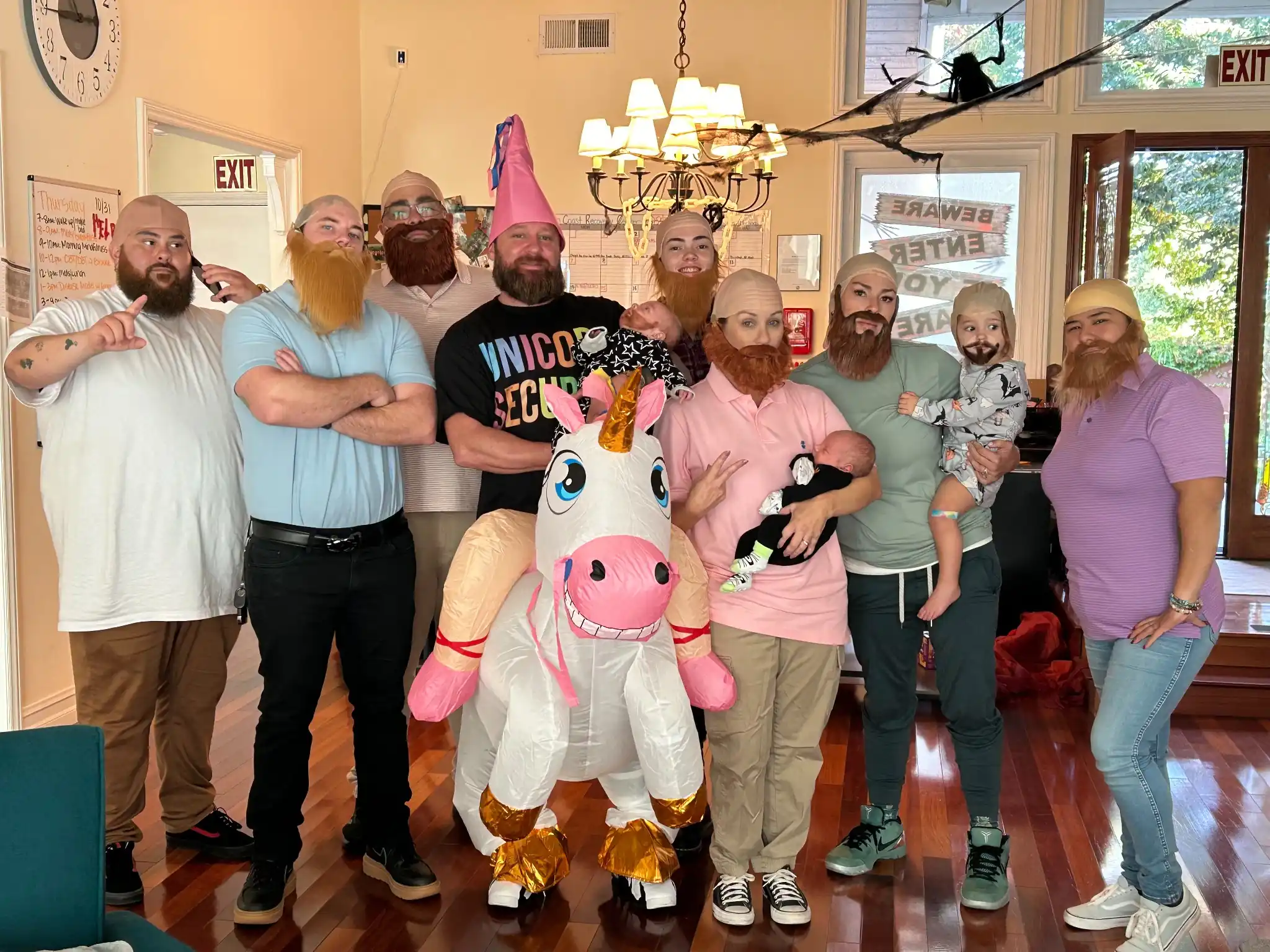
Each person has a different role and a different lens.
A nurse may notice physical symptoms or changes in sleep. A therapist may begin to understand the emotional patterns underneath substance use. The medical team is looking at health, withdrawal and psychiatric needs. Case management is thinking about what happens after residential treatment ends.
Those perspectives become much more useful when they are connected.
“From intake on, our whole team stays connected to the client’s story.” — Tami Distefano
For the person in treatment, that means there isn’t just one person responsible for understanding what is going on.
Why Communication Matters During Medical Detox
The first days of recovery can change quickly.
During medical detox, clients may be dealing with withdrawal symptoms, disrupted sleep, cravings, anxiety, depression, changes in appetite and other physical or emotional symptoms. That makes communication between nursing, medical and clinical staff especially important.
Consider something as simple as a client becoming increasingly anxious every evening.
Nursing may notice restlessness and difficulty sleeping. In therapy, the client may begin talking about how evenings were historically associated with drinking or using drugs. The medical team may need to determine whether some of what the client is experiencing is related to withdrawal, medication or another health concern.
Those are not three unrelated problems.
They are three views of the same person.
When the team communicates, treatment can respond to the whole picture rather than asking the client to explain each piece separately to different departments.
Therapy Shouldn’t Happen in a Vacuum
The Retreat at Orange County incorporates evidence-based therapies such as Cognitive Behavioral Therapy (CBT), Dialectical Behavior Therapy (DBT) and EMDR, along with family therapy and holistic approaches.
But a therapy modality alone does not tell the whole story of treatment.
CBT may help someone recognize the thoughts and behaviors connected to substance use. DBT can help build tools for emotional regulation and distress tolerance. EMDR may be incorporated when clinically appropriate to address trauma and painful experiences connected to addiction.
What matters is how those therapies fit into the person’s actual experience.
If someone is struggling with cravings, sleep or anxiety outside the therapy room, that information matters inside the therapy room too. If therapy uncovers a major trigger, the rest of the treatment team may need to know how to better support that person throughout the day.
Good care does not stop when a session ends.
Family Issues Don’t Stay Inside a Family Session Either
Addiction almost never affects one person alone.
Parents, spouses, children and other loved ones may come into treatment carrying fear, anger, guilt, confusion or years of broken trust. A family conversation can uncover information that changes how the clinical team understands what a client is facing.
It can also affect what happens afterward.
A discharge plan may need to account for boundaries at home, relationship dynamics, living arrangements or situations that could increase relapse risk.
In a collaborative treatment model, family therapy is not treated as an isolated event. What comes up can help inform the larger treatment plan when appropriate.
Case Management Starts Before Someone Is Ready to Leave
Another place collaboration becomes important is aftercare and discharge planning.
Leaving residential treatment can bring up a completely different set of questions:
Where will I live? What happens if I get triggered? Who will I call? Do I need continued therapy? What relationships are safe to return to? What will my days actually look like without drugs or alcohol?
Those decisions are easier to make when case management understands what has been happening throughout treatment.
The best discharge plan is not simply a list of appointments. It should reflect what the team has learned about that particular person, including their triggers, strengths, mental health needs, support system and areas where they may need more structure.
There’s Also a More Human Benefit: You Don’t Have to Keep Starting Over
There is another side of collaborative care that is harder to put into clinical language.
People entering addiction treatment are often tired.
They may have spent months or years explaining themselves to family members, physicians, employers or people who simply did not understand what was happening. Some arrive guarded. Some minimize what they are going through. Others are finally talking honestly about experiences they have never discussed before.
Having to start from zero with every new person can be exhausting.
A connected treatment team can reduce that burden.
Clients still have their own relationships with their therapist, nurses, physicians and other staff members. Privacy still matters. But the responsibility for piecing together the entire story does not have to fall solely on the person who came in asking for help.
Tami describes that distinction this way:
“When a client walks through our doors, they’re not just assigned to a therapist. They’re supported by a team.”
And that may be one of the most important things to understand about treatment at The Retreat.
Questions to Ask When Comparing Addiction Treatment Centers
If you’re looking for residential addiction treatment or detox in Orange County, don’t be afraid to ask how a program actually works behind the scenes.
Ask who is involved in your treatment plan. Ask how nurses and therapists communicate. Ask how medical concerns are incorporated into clinical care. Ask when discharge planning begins. Ask what happens when something changes halfway through treatment.
The answers can tell you a lot more about a program than a list of amenities.
Because ultimately, choosing an addiction treatment center is not only about what services are offered.
It is also about who will be there, how well they know you and whether they are working together.
Frequently Asked Questions
What is collaborative care in addiction treatment?
Collaborative care is an approach to addiction treatment in which professionals from different disciplines, such as medical providers, nurses, therapists and case managers, communicate and coordinate care around a shared treatment plan.
Why is collaborative care important during detox?
Withdrawal symptoms and emotional needs can change quickly during detox. Communication between medical, nursing and clinical staff helps the team respond to changes and understand how physical, psychological and behavioral symptoms may be connected.
Who is part of the treatment team at The Retreat Orange County?
The Retreat’s team includes medical, nursing, therapy, case management and program staff who work together throughout detox and residential addiction treatment in Santa Ana, California.
Does The Retreat at Orange County provide both detox and residential addiction treatment?
Yes. The Retreat at Orange County provides medical detox and residential addiction treatment in Santa Ana, California, with individualized treatment planning, evidence-based therapies and holistic support.
Meet the People Behind Your Care
If you or someone you love is considering addiction treatment in Orange County, getting to know the people behind the program can be an important part of choosing where to go.
Learn more about The Retreat at Orange County’s treatment team, explore our detox and residential addiction treatment programs, or speak with admissions about what treatment could look like for you.